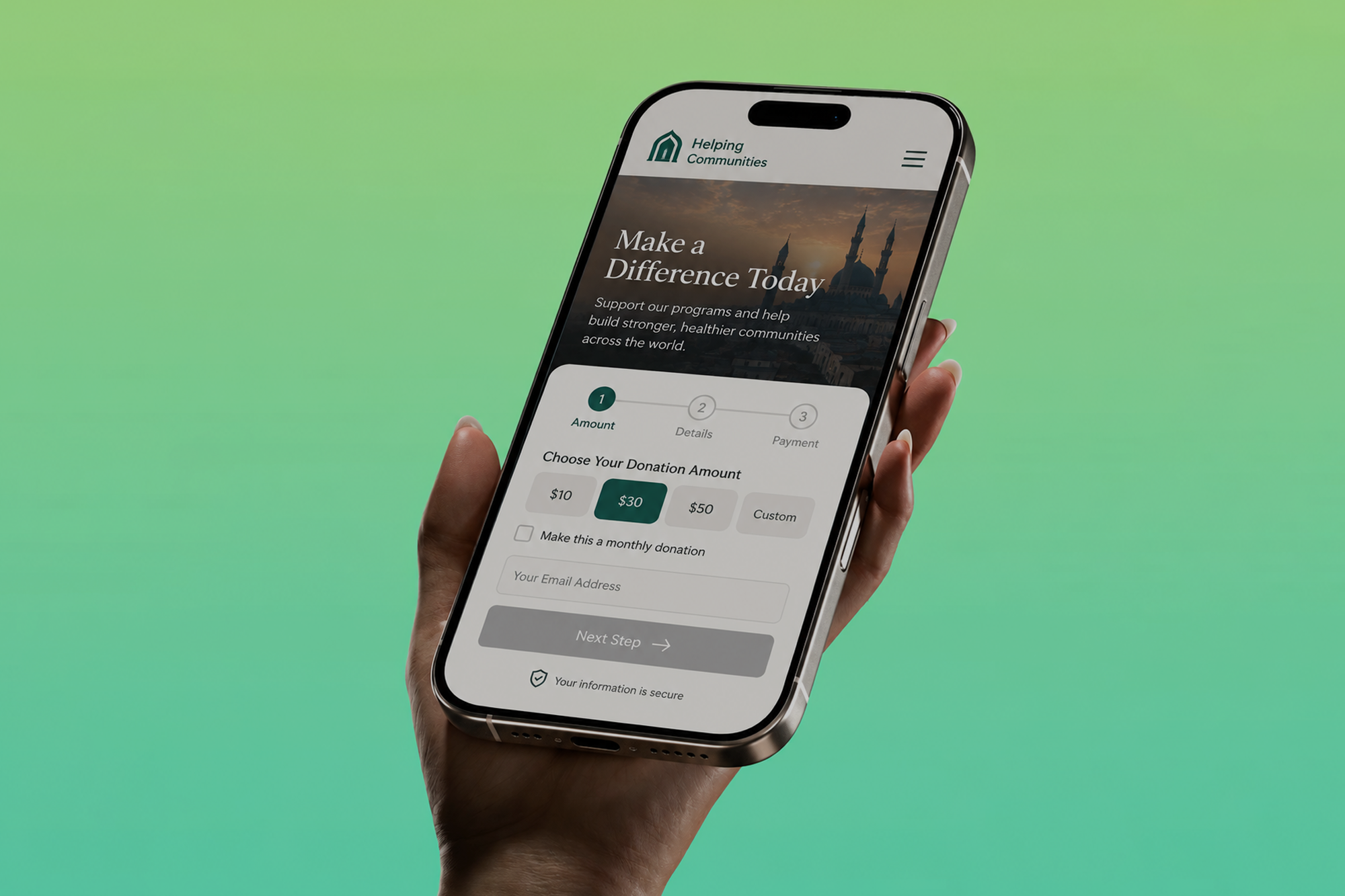
The first ten days of Dhul Hijjah are among the holiest in the Islamic year. They include Youm e Arafah, the lead-up to Hajj, and Eid al-Adha, a trilogy of spiritual urgency that drives a surge in donor intent unlike anything else on the calendar. According to the Muslim Zakat Report 2023, over $1.8 billion in Zakat was given by U.S. Muslims in 2022 alone, with 45% of Muslims giving specifically during the days of Dhul Hijjah. That is not a trickle. That is a tidal wave of generosity, and if your nonprofit does not have a Dhul Hijjah donation campaign strategy in place, you are leaving serious money on the table.
This guide is for Islamic nonprofits and Muslim-led organizations who want to stop winging it and start winning during peak donation season. Whether you are running Eid al-Adha fundraising online for the first time or looking to finally scale what you have been doing, here is what actually works.
Why Your Dhul Hijjah Donation Campaign Needs a Digital-First Strategy
The window is short. The intent is high. Most nonprofits miss both.
The problem is that most Islamic nonprofits either launch too late, rely purely on in-person outreach, or run campaigns so generic they could be mistaken for any other time of year. Digital marketing for qurbani donations requires precision timing, culturally resonant messaging, and a donor experience that removes every possible point of friction.
Donors approaching Eid al-Adha are not just in a "giving mood." They are fulfilling spiritual obligations and acting on deeply personal intentions. Donors are not just giving during these peak periods. They are fulfilling religious obligations and acting on deeply personal intentions, which is why clarity around fund designations is essential. Transparency is your most powerful campaign asset.
A 2024 survey revealed that most donors give directly to individuals rather than to nonprofits because of trust concerns, underscoring why transparency, trust, and professionalism are now critical to winning donor support. For your Dhul Hijjah donation campaign, this means publishing clear fund designations, sharing real-time impact reports, and showing donors exactly where their qurbani or Sadaqah will go. The organizations winning this season are not necessarily the biggest. They are the most trusted.
You can read more about what effective nonprofit digital marketing looks like in practice and understand why going digital is no longer optional for faith-based fundraising.
>> Related Post: Best Digital Marketing Agencies for Islamic Nonprofits in 2026
How to Build a Dhul Hijjah Donation Campaign That Actually Converts
If you are launching your Dhul Hijjah giving campaign on the first of Dhul Hijjah, you are already late. The most effective nonprofit campaigns start warming up donors four to six weeks before the key dates. This means publishing educational content about the significance of these ten days, running retargeting ads to existing donors, and seeding email sequences that build toward Youm e Arafah, the single most spiritually charged day of the entire year. A well-built Dhul Hijjah email series looks like this:
- Three weeks out: an educational email about the spiritual significance of Dhul Hijjah and how your organization channels giving during this time.
- Two weeks out: a donor impact story rooted in a previous campaign, ideally featuring real beneficiaries with names and locations.
- One week out: your campaign launch with clear designations for Qurbani, Sadaqah, and Zakat.
- Day of Arafah: a high-urgency appeal anchored in the Islamic significance of the day and a real-time donation counter.
- Eid al-Adha: a celebration and final push, thanking donors and sharing your campaign milestone publicly.
Each email should feel like it belongs in Dhul Hijjah, not like a generic fundraising task with a crescent moon emoji slapped on top.
Running paid social ads without audience segmentation is an expensive way to generate awareness with little to show for it. The nonprofits seeing strong returns on digital marketing for qurbani donations are those targeting warm audiences, meaning people who have visited their site in the last 180 days, engaged with their social content, or donated in a previous campaign. Charities that run campaigns through Muslim-audience-focused ad networks see on average a 3 to 5x increase in donations during peak giving seasons, due to the focus on reaching Muslim audiences through culturally relevant and spiritually resonant advertising.
>> Related Post: Fundraising Success Strategies to Retain and Grow Your Repeat Donor Base
Digital Marketing for Qurbani Donations and Eid al-Adha Fundraising Online: A Dhul Hijjah Donation Campaign Breakdown
Here is a channel-by-channel breakdown of what a fully executed Dhul Hijjah donation campaign looks like in practice, covering the tactics that separate high-performing organizations from those who just show up and hope for the best.
1. Make Recurring Giving a Core Part of Your Dhul Hijjah Strategy
The instinct for most nonprofits during Dhul Hijjah is to chase one-time gifts. But the organizations building sustainable revenue are using this peak giving moment to convert single donors into recurring supporters. Offering a "Daily Sadaqah" option, allowing donors to give a set amount automatically across each of the ten days of Dhul Hijjah. This has become one of the most effective conversion tools in the Islamic nonprofit space.
Not only does it increase total gift size, but it creates a habit of giving anchored to one of the most spiritually significant periods of the year. A donor who gives across all ten days of Dhul Hijjah has a relationship with your organization that a one-time donation cannot replicate.
2. Storytelling Is Not Optional: It Is the Campaign
The nonprofits that consistently outperform during Eid al-Adha fundraising online understand one thing: donors do not give to causes, they give to people. A statistic about food insecurity is abstract. A video of a family receiving qurbani meat and celebrating Eid together is unforgettable.
In Dhul Hijjah 1446, the Human Development Fund delivered life-changing support to over 200,000 people across 27+ countries through their qurbani campaign, with donors' generosity cutting across continents and conflict zones to bring relief and joy to thousands of families. That kind of impact storytelling, specific, human, and verified, is what drives shares, repeat donations, and word-of-mouth that no paid ad budget can buy.
Build your content calendar around real stories from real beneficiaries. Film short videos before Dhul Hijjah begins. Share them in your emails, on your social media, and on your donation page. Let the story do the fundraising.
3. SEO for Dhul Hijjah: Start Ranking Before the Season Begins
Here is a channel most Islamic nonprofits completely neglect during Dhul Hijjah: organic search. People are actively searching for terms like "where to give qurbani," "best charity for Eid al-Adha," and "Dhul Hijjah Sadaqah", and if your content is not ranking, those high-intent donors are going to your competitors.
Building SEO-optimized content around your Dhul Hijjah donation campaign should begin at least 60 to 90 days before the season. This means publishing blog posts, FAQs, and landing pages that answer the exact questions your donors are typing into Google. Aeon Digital specializes in building this kind of organic visibility for Islamic nonprofits, helping your organization show up precisely when donor intent is at its peak. You can read about what effective nonprofit digital marketing looks like in practice and understand why search is no longer optional for faith-based fundraising.
Long-Tail Keywords That Drive Qualified Qurbani Traffic
Some of the highest-converting search terms around Eid al-Adha fundraising online are deeply specific: "qurbani donation online for Palestine," "Dhul Hijjah Sadaqah for orphans," "best Islamic charity for Eid ul Adha." These are not high-volume keywords, but the donors searching them are ready to give. Targeting long-tail phrases like these in your content strategy brings in traffic that converts at a far higher rate than broad keywords.
4. Donor Retention After Dhul Hijjah: The Season Doesn't End on Eid
The biggest mistake Islamic nonprofits make after a successful Dhul Hijjah giving campaign is going quiet. Donors who gave during this peak window are among your most valuable. Within 72 hours of Eid al-Adha, every donor should receive a personalized thank-you message that includes a specific impact report from the campaign, not a generic "thank you for your donation" but something that says: your qurbani reached this community, in this country, and here is what happened next. This kind of accountability is what converts a first-time donor into a lifetime supporter and is a core part of the donor retention strategies that top nonprofits use year-round.
>> Related Post: Key Online Fundraising Trends and Statistics for Nonprofits in 2026
Why Your Dhul Hijjah Donation Campaign Performs Better With AEON Digital
AEON Digital was built for exactly this moment. While most marketing agencies treat Islamic nonprofits as a niche afterthought, AEON operates from a genuine understanding of Muslim donor behavior, Islamic giving ethics, and the spiritual weight that seasons like Dhul Hijjah carry. That understanding shapes everything, from how campaigns are structured to how impact is communicated to donors who expect more than a generic appeal.
What sets AEON apart is not just cultural fluency but strategic integration. SEO, paid media, email sequences, and social content are not treated as separate efforts; they are built to work as one system, timed precisely around the ten days that matter most. If Dhul Hijjah is one of the most important moments on your fundraising calendar, it deserves a partner who has been preparing for it longer than you have.
Ready to make this your best-performing Dhul Hijjah yet? Let's build something that lasts.
FAQs
1. What makes a Dhul Hijjah donation campaign different from a regular fundraising campaign?
Donors aren't just feeling generous, they're fulfilling spiritual obligations. Your messaging, fund designations, and donor experience must reflect that. Generic campaigns dressed in seasonal graphics consistently underperform those built around Dhul Hijjah's actual significance.
2. When should I start preparing my Dhul Hijjah giving campaign?
Start 60–90 days before Dhul Hijjah begins. You need time to rank in search, warm up your email list, and run retargeting ads. Launching on Day 1 means you've already missed your window.
3. What digital channels work best for Eid al-Adha fundraising online?
Email, paid social (Meta and Google), organic search, and SMS. Email delivers the highest ROI when sequenced well. Paid social works best targeting warm audiences. SEO captures high-intent donors already searching to give. SMS works for last-day urgency pushes.
4. How do I structure my Dhul Hijjah donation page to maximize conversions?
Fast load time on mobile, clear fund designations (Qurbani, Zakat, Sadaqah), a real-time goal meter, one strong beneficiary story or video, and minimal form fields. Every extra click loses you, donors.
5. Should I offer recurring giving options during Dhul Hijjah?
Yes. A Daily Sadaqah option spread across all ten days increases total gift value and builds a habitual relationship with your organization. Offer one-time, 10-day, and monthly options together so donors can choose what feels right.
6. How important is storytelling in digital marketing for Qurbani donations?
It's everything. Stats give credibility; stories drive action. A short video of a family receiving qurbani meat will outperform any text-only appeal. Two or three beneficiary videos filmed before the season begins are your highest-ROI content assets.
7. What role does SEO play in a Dhul Hijjah giving campaign?
SEO captures donors already in decision mode; the highest-quality traffic you can get. Search terms around qurbani and Eid al-Adha spike sharply during this season. Content published 60–90 days out builds the authority needed to rank before the peak window opens.
8. How do I segment my donors for Dhul Hijjah email campaigns?
Use three segments: lapsed donors (re-engagement messaging), active donors (impact stories and upgrade asks), and cold subscribers (education and trust-building before any donation ask). Segmented campaigns consistently outperform broadcast blasts on every metric.
9. How do I measure the success of my Dhul Hijjah donation campaign?
Track: total raised, average gift size, new vs. returning donor rate, email open and click-through rates, donation page conversion rate, and cost per dollar raised. Post-campaign, monitor 30- and 90-day donor retention, that's what tells you if you built relationships or just transactions.
10. Can smaller Islamic nonprofits compete with larger organizations during Dhul Hijjah?
Yes. Bigger budgets don't always win. Smaller organizations often have tighter community trust and more personal donor relationships, both of which convert better than ad spend. The right strategy, a clean donation page, and authentic storytelling close the gap faster than most organizations expect.