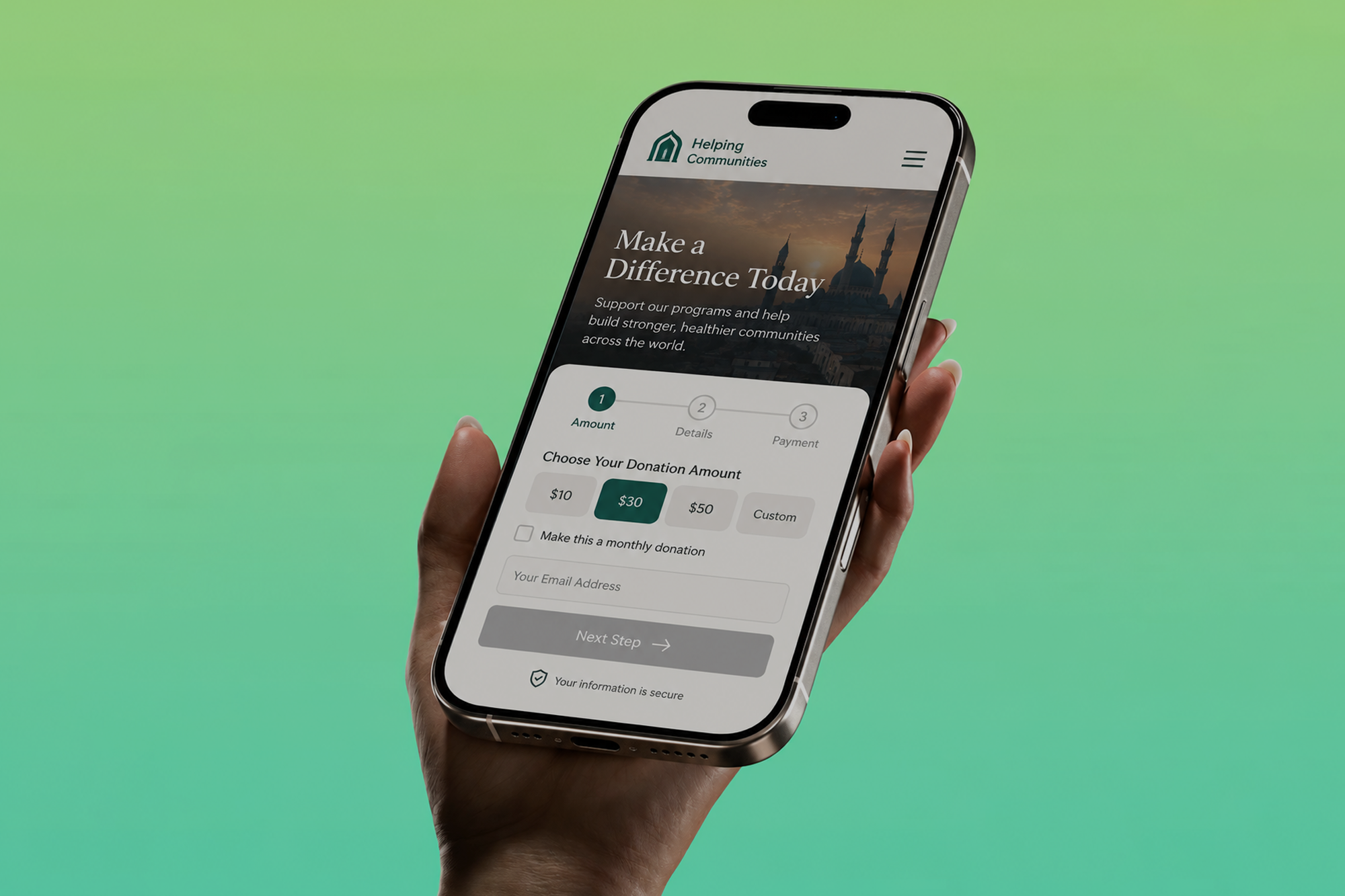
In today’s digitally connected world, even nonprofits must behave like savvy online marketers. Whether you’re running a small grassroots charity or a mid-sized NGO, having a strong website and smart website marketing techniques can mean the difference between merely existing and truly thriving. This blog will walk you through “10 Effective Website Marketing Techniques for Nonprofit Growth”, explain why a good website is non-negotiable for success, and show how Aeon Digital can help your nonprofit grow its website and digital impact.
Suppose you’ve ever wondered how to convert visitors into donors, how to make your website do heavy lifting while your team focuses on mission work, or how to stretch your marketing budget further (because let’s face it, nonprofit budgets are usually tight). In that case, you’re in the right place.
Why is a Good Website Needed for Nonprofit Success?
Many nonprofits undervalue their website, treating it as a “nice to have” rather than a core strategic asset. But the truth is, your website is your digital storefront, your first impression maker, and often the primary way potential supporters decide whether to give or engage. Here are key reasons why a strong website matters:
1. First impressions matter
94% of donors say their first impression of a brand is based on its website’s design. If your website looks cluttered, slow, or outdated, that could cost you credibility and donations, right away.
2. It anchors your digital strategy
Your website is the foundation upon which your digital marketing and fundraising campaigns are built. You might be great at social media or email outreach, but if those efforts link back to a weak website, much of the potential impact is lost.
3. Donor trust & conversion
Nonprofit supporters want to be sure their money or time is used well. A well-designed website that’s clear, professional, transparent, fast, and mobile-friendly builds trust. Only around 22% of nonprofits have websites designed for those with visual and hearing disabilities. That highlights how many organisations are missing key accessibility and credibility opportunities.
4. Growing competition for attention
With more nonprofits struggling for attention than ever, your website must stand out. According to the “Ultimate Non-Profit Marketing Strategy Guide” by Dotdigital, nonprofits face limited budgets, skills gaps, and high competition, and a weak website just compounds those challenges.
5. Supports multiple goals: awareness, engagement, fundraising
Whether you want volunteers, donors, event registration, fundraising, or advocacy, your website is often the “hub” where all these flows converge. Without a website that’s optimized for conversion and engagement, you may be losing opportunities at every step.
In short, investing in a good website is not optional if you’re serious about growth. It’s your digital basecamp for mission success.
>> Related Post: Top 5 Mistakes in Nonprofit Marketing and How to Avoid Them
Top 10 Website Marketing Techniques for Nonprofit Growth in 2026
Here are ten actionable website marketing techniques that can fuel nonprofit growth. Many of these draw from best-practice sources, adapted for nonprofits, and sprinkled with a little bit of fun to keep things engaging.
1. Optimise for mobile & speed
Mobile usage is dominant. Visitors expect websites to load quickly and look good on phones/tablets. 25% of website visitors will abandon a website if it takes more than four seconds to load. Additionally, responsive design is a must.
Tip: Run a site speed test (e.g., via Google PageSpeed). Also, use mobile-first templates and avoid bloated images or scripts.
2. Strong call-to-action (CTA) and prominent buttons
This technique is simple but powerful. Make your ‘Donate’, ‘Sign Up’, ‘Volunteer’ or ‘Get Involved’ buttons impossible to miss. According to the article on nonprofit web design best practices, placing your donate button front and centre (top nav bar, every page) significantly improves online giving.
Tip: Use contrasting colours that stand out, keep the text short & urgent (“Give Today”, “Join Now”), and test placement (A/B test if you can).
3. Build a clear, compelling value proposition
Your website header should answer: What can I achieve by supporting this mission? High-impact nonprofit campaigns emphasise concrete outcomes, not vague statements.
Tip: Use a headline like: “Help 200 kids get school meals this month” instead of “Support education”.
4. Use search engine optimisation (SEO)
Being discoverable matters. The top-ranking page in Google gets 33% of all search traffic. And as part of website best practices, making your site discoverable through SEO is listed as a key point.
Tip: Use keywords relevant to your cause, optimize meta titles/descriptions, ensure site architecture is clean, use alt-tags for images, and build backlinks (via partner organisations, media mentions, etc).
5. Create emotionally engaging storytelling
Facts are good, but stories are great. In the nonprofit space, storytelling builds connection. For example, one guide notes that strong visuals + personal stories drive donor action more effectively than logic alone.
Tip: Dedicate a “Stories” or “Impact” section on your website with short videos or testimonies. Let visitors see human faces behind your mission.
>> Related Post: Marketing Automation for Nonprofits: Benefits & Use Cases in 2026
6. Use multi-channel integration
Your website doesn’t stand alone. Campaigns that combine email, social media, paid ads, and your website perform better. Successful campaigns use multi-channel reach.
Tip: Embed social share links, include newsletter signup forms, retarget website visitors via email or ads, and use consistent branding across channels.
7. Build an email list and engage consistently
While the website is the base, email is still a workhorse for nonprofits. According to “45+ Nonprofit Marketing Statistics”, email-based marketing generates about 28% of all online nonprofit revenue.
Tip: Include email opt-in across your website (footer, pop-up, blog sidebar), offer a value (like e-guide or mission update), send a welcome sequence, segment your list, and keep a consistent cadence.
8. Leverage paid advertising and grants wisely
For growth, sometimes you need to invest. One resource argues that paid advertising can elevate your cause and extend reach beyond organic channels.
Tip: Consider platforms like Google Ad Grants (free search ads for nonprofits), Facebook/Meta ads targeted to lookalike audiences, and track ROI (which campaigns led to website donations or signups).
9. Use data, analytics, and optimise continuously
You can’t improve what you don’t measure. The ultimate strategy guide emphasises data-driven decision-making.
Tip: Set up Google Analytics, track user flows, conversion rates (visitors → donors/volunteers), bounce rate, time on page. Use heatmaps or session recordings if budget permits. Identify pages underperforming and iterate.
10. Focus on accessibility, credibility & trust
A technically sound website also means being accessible and trustworthy. As mentioned, only 22% of nonprofits had sites optimised for visual/hearing disabilities in one dataset. And consistent branding helps build donor trust. Forms that are branded get on average 7× more than non-branded ones.
Tip: Ensure your site includes SSL (HTTPS), accessible alt tags, colour contrast, simple navigation, visible privacy/donation policy, testimonials, and transparent impact metrics.
>> Related Post: Real-World Nonprofit Marketing Examples to Guide Your Strategy in 2026
How Can Aeon Digital Help Your Nonprofit Grow Its Website?
Here’s where we show how Aeon Digital can support your growth journey. Think of us as your digital partner, combining strategy, tech, creativity, and nonprofit know-how.
Strategy & Audit
We begin with a website audit: performance, SEO, mobile responsiveness, accessibility, user flow, and analytics. You’ll get a roadmap of quick wins and long-term improvements. We then align your website goals with marketing techniques and set KPIs you can track.
Design & User Experience
Aeon Digital doesn’t just make your site look good; we make it work. From strong CTAs and emotional storytelling to high-performance mobile design, we ensure your website reflects professionalism and mission integrity. We build on best-practice patterns: easy navigation, clear donate buttons, fast load times, and visually engaging content.
SEO & Content Marketing
We’ll optimize your site for discoverability and support you with content creation: blog posts, impact stories, FAQs, and lead magnets. This increases your chances of being found, engaged with, and converted.
Email & Multi-Channel Integration
Aeon helps you set up email capture flows, newsletter templates, segmentation, and tie your website to social & ad campaigns. This ensures your website isn’t just a static presence, but a dynamic hub of your overall digital ecosystem.
Analytics, Testing & Optimisation
We set up analytics dashboards, review your website conversions, bounce rates, donor funnel, etc. Then we help you test variations (button placement, copy, visuals) and refine. Because growth is iterative, not one-and-done.
FAQs
1. What kind of website platform should a nonprofit use?
Many nonprofits (58%) use WordPress as their CMS. The key is to pick a platform that is flexible, easy to update, mobile-friendly, and scalable so it can grow as your organisation grows.
2. How quickly should our website load to avoid losing visitors?
Research shows that 25% of website visitors will abandon a website if it takes more than four seconds to load. So aim for load times under 3-4 seconds on mobile.
3. How much of our website budget should we invest in design vs marketing?
There’s no one-size-fits-all answer, but ensure you allocate enough to make your site professional, fast and mobile-ready (design/UX) and to promote it (SEO, email capture, content). A weak site will reduce your ROI significantly.
4. Does storytelling really matter for nonprofits online?
Yes, strong personal stories + good visuals help create emotional connection and drive donations or action. People don’t just give money; they invest in stories, impact, and change.
5. Can a small nonprofit compete with larger ones online?
Absolutely. By focusing on niche audiences, clear CTA, seamless website experience, and smart use of data, even small organisations can punch above their weight. The 10 techniques above apply regardless of size.
6. Should we try paid ads if our budget is tight?
Yes, but smartly. Paid advertising and grants (such as Google Ad Grants) can extend reach and drive traffic to your website. Effective nonprofit advertising is about clear value propositions, good visuals, measurement & multi-channel reach.
7. How often should we update our website content?
Regularly. Google and other search engines favour fresh content, and your audience appreciates timeliness. Also, new stories, blog posts, and impact updates help keep your site engaging and relevant.
8. What accessibility features should we ensure on our website?
Ensure your site supports those with visual and hearing impairments: Alt text on images, transcripts for videos, good colour contrast, navigability via keyboard, ARIA labels, etc. Only around 22% of nonprofits currently have websites designed for such disabilities.
9. How can we measure whether our website marketing is working?
Define KPIs: e.g., website visits, bounce rate, time on page, conversion rate (visitors → donor/volunteer), average donation size, email list growth. Use analytics tools to track. Use A/B testing to compare versions.
10. How long will it take to see results from website marketing improvements?
It depends. Some changes (e.g., smaller load times, updated CTA layout) may yield improvements within weeks; others, like SEO or brand trust, may take months. The key is consistent effort: implement, monitor, optimise.