Everyone in the nonprofit space has heard the pitch by now. AI will save your team hours, personalize your donor outreach, predict who is going to give before they even know it themselves, and generally solve the capacity problem that has quietly plagued the sector for decades. Some of that is true. A lot of it is hype. And somewhere in the middle of those two things is where most nonprofits find themselves in 2026, using AI in some shape or form but not entirely sure whether it is doing anything meaningful.
That uncertainty is not a sign that your organization is behind. It is actually a very honest reflection of where the sector stands right now. AI adoption among nonprofits has climbed faster than the understanding of how to use it well. If your team has been wondering whether you are approaching this the right way, or whether you are missing something everyone else has already figured out, this breakdown is for you.
Artificial Intelligence Marketing Statistics for Nonprofit Organizations in 2026:
1. AI Adoption in Nonprofits
- 70% believe AI can reduce workload and improve communications.
- 60% lack in-house expertise to assess tools.
- Only 4% have AI-specific training budgets.
- 40% say no one in their organization is educated in AI.
- 76% do not have an AI policy.
2. Concerns About AI
- 70% worry about data privacy and security.
- 63% are concerned about accuracy.
- 57% worry about representation and bias in generative AI.
- 37% are involved in wider AI discussions, while others cite lack of awareness or resources.
3. AI in Nonprofit Marketing
- 75% believe generative AI can transform marketing, but only 25% have concrete ideas.
- Top uses: internal productivity (35%), marketing/communications (31%), fundraising (24%).
- Chatbot usage: ChatGPT (57%), Copilot (23%), Gemini (14%).
- 82% use AI informally to draft content like donor emails.
- Only 15% disclose their use of generative AI tools.
- 69% of marketers using AI have not received formal training.
4. AI in Fundraising
- 4.5% of donors use chatbots to research causes.
- Average gift from chatbot-driven donors: $250.
- 67% of online donors agree nonprofits should use AI.
- Only 4% use smart donation forms; <1% use real-time fundraising intelligence.
- 30% of nonprofits report AI boosted fundraising revenue in the past year.
- AI-driven donation forms: average one-time gift $161 vs. $115 industry average; monthly recurring $32 vs. $24.
- 13% use predictive AI for donor prospecting.
5. Donor & Foundation Perspectives
- 63% of fundraisers worry AI donor communications feel less personal, but 82% are comfortable using AI for donor research.
- Generous donors are more supportive of AI use (30% high donors, 19% medium, 13% small).
- 43% of donors say AI use would have a positive or neutral effect on giving; 31% say less likely to donate.
- 23% of foundations reject AI-generated grant applications, 10% accept, 67% undecided.
>> Related Post: How a Human-Centered AI Approach Can Transform Nonprofits
What the AI Marketing Statistics for Nonprofits in 2026 Are Actually Telling You
The Real Story Behind the Numbers
The Artificial Intelligence statistics for nonprofits in 2026 paint a picture that is more complicated than the headlines suggest. Yes, the majority of nonprofits are now using AI in some capacity. No, that does not mean the majority are seeing transformational results. According to Virtuous and Fundraising.AI's 2026 Nonprofit AI Adoption Report, 92% of nonprofits are using AI, yet only 7% report major improvements in organizational capability. That gap deserves more attention than it usually gets.
What it tells you is something most AI vendors would rather not advertise: access to a tool is not the same as benefit from a tool. The organizations sitting at that 7% mark are not using fancier software than everyone else. They are using AI differently, with shared team workflows, documented processes, and clear goals tied to fundraising and communications outcomes. The rest are largely in what researchers call the "efficiency plateau," where AI helps one person draft one email a little faster, but nothing structurally changes.
Why Most Nonprofits Are Stuck
If your team is somewhere on that plateau, the most likely reason is not a lack of effort. It is a lack of structure. When AI use is siloed to one enthusiastic staff member who figured it out on their own, the rest of the organization keeps operating the same way it always has. There is no shared language, no shared workflow, no way to measure whether any of it is working. Adoption without intention almost always produces exactly this kind of result.
The other barrier is confidence. A significant portion of nonprofit professionals genuinely do not know how to evaluate whether an AI tool is good for their specific situation, which is not surprising given how fast the space has moved. This is not a technology literacy problem as much as it is a strategy problem. Knowing which tools exist is far less useful than knowing what problem you are actually trying to solve and whether AI is the right solution to it.
What Good AI Integration Actually Looks Like
Organizations getting the most from AI in 2026 are not using it to replace anything. They are using it to extend what their teams can do with the time and people they already have. Content drafts get written faster. Donor data gets analyzed in minutes instead of hours. Grant writing starts from a structured first draft instead of a blank page. Humans are still making every meaningful decision, but they are arriving at those decisions with better information and more time to act on it.
The nonprofit guide to digital marketing makes this point clearly. Strategy always has to come first. AI is a tool that accelerates execution, not a substitute for knowing what you are trying to accomplish in the first place.
>> Related Post: 10 AI Marketing & Fundraising Tools for Nonprofits in 2026
AI Fundraising Statistics 2026: The Gap Between Using AI and Benefiting from It
Where the Wins Are Coming From
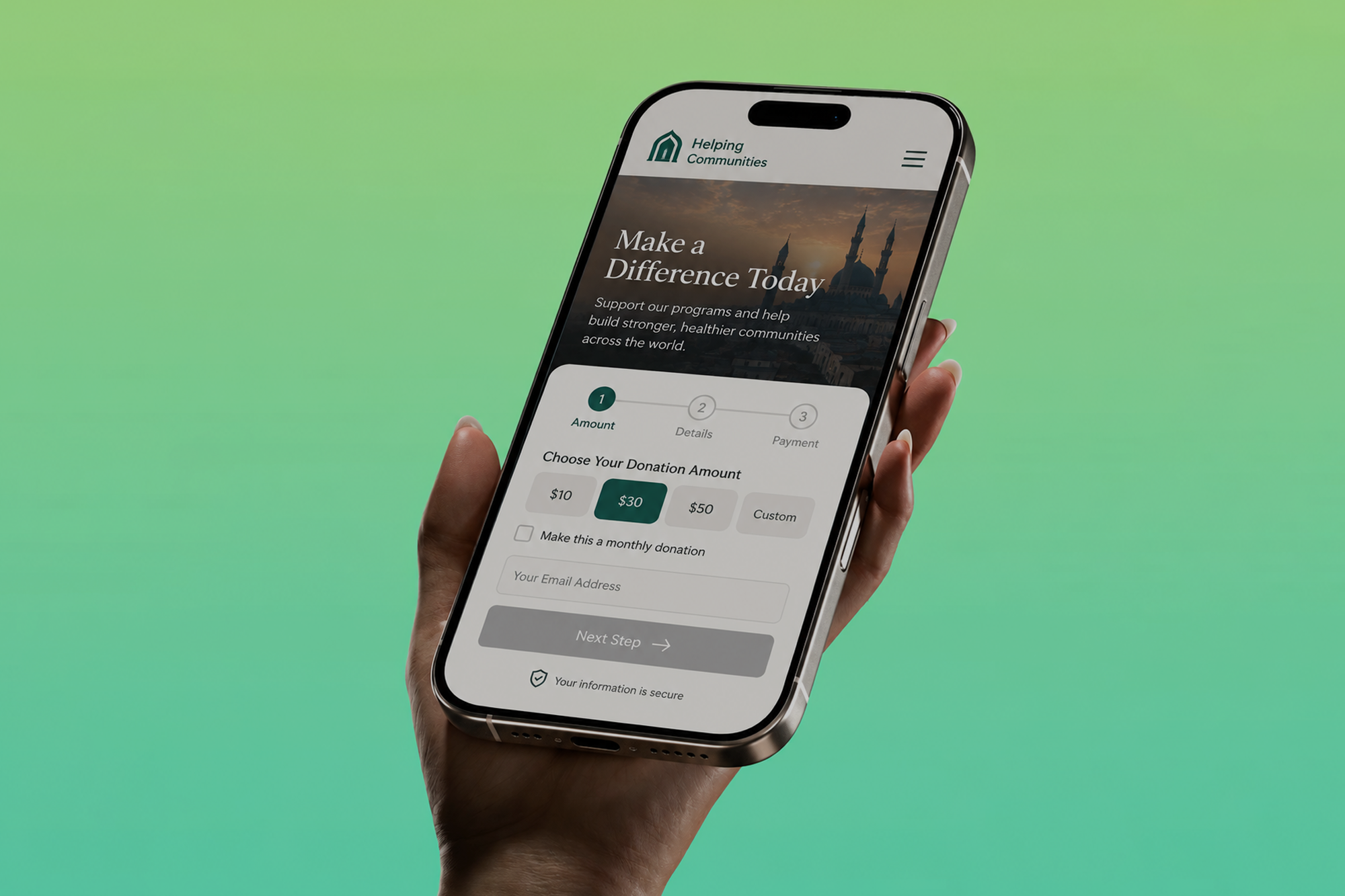
The AI fundraising statistics for 2026 that are worth paying attention to are the ones tied to specific, measurable outcomes rather than vague claims about efficiency. Personalized outreach powered by predictive AI is producing real fundraising gains for the organizations that have actually built it into their process. Donation forms that use AI to adjust ask amounts based on behavioral signals, without using any personally identifiable information, are generating average one-time donations of $161 compared to the industry average of $115, according to Nonprofit Tech for Good's State of Nonprofit Digital Engagement Report. That is not a marginal difference.
What is driving that kind of result is AI's ability to meet a donor at the right moment with the right number. The logic is simple. A donor who gave $50 two years ago and has since attended two events and opened every email you have sent them is probably ready for a $150 ask. A donor who lapsed for eighteen months and just came back through a social media campaign is not. Without AI, a fundraiser working a list of two thousand people cannot realistically make that distinction at scale. With predictive AI built into the donation experience, it happens automatically and without anyone on your team spending extra time to make it work.
The Tools Are There. The Habits Are Not.
Here is the honest tension in the AI fundraising statistics for 2026. The tools that produce outcomes like the above are not new or particularly expensive. Smart email sending, predictive donor prospecting, and CRM-integrated AI features are available on platforms many nonprofits are already paying for. The reason more organizations are not seeing results from them is simply that the features are not being used, or they were turned on once and never revisited.
Building better habits around AI means treating it the way you would treat any other part of your communications workflow. It needs someone responsible for it, a cadence for reviewing what is working, and a way of measuring whether it is contributing to outcomes you actually care about. None of that is technically complicated. All of it requires intentionality that is easy to skip when your team is already stretched. This is also where marketing automation for nonprofits becomes relevant, because AI and automation work best when they are set up thoughtfully and revisited regularly, not treated as a one-time task.
>> Related Post: 2026 Social Media Stats for Nonprofits: Data & Fundraising Insights
Artificial Intelligence Donation Statistics and What Donors Actually Feel About It
Donor Sentiment Is Not What You Might Expect
The Artificial Intelligence donation statistics from 2026 are some of the most instructive in the whole dataset, because they challenge a common assumption that donors are universally skeptical of AI. The reality is more nuanced. Most donors are not anti-AI. They are anti-inauthenticity. There is a difference, and it matters for how you communicate.
What donors tend to respond negatively to is not AI itself but the feeling of being processed. A thank-you message that could have been sent to anyone, a donation appeal that completely ignores their history with your organization, a follow-up that arrives at the same time as everyone else's, regardless of when they gave. These are the experiences that erode trust, and they have been happening long before AI entered the picture. AI, used carelessly, just makes it easier to do those things at a greater scale.
The Right Way to Think About AI and Donor Relationships
The most important thing to understand about AI and donor relationships in 2026 is that the technology is not trying to replicate the human connection. It is creating the conditions for more of it. When AI handles the administrative burden of segmenting your list, drafting a first version of your year-end appeal, or flagging donors who have gone quiet, your team gets back time. That time can go toward the calls, events, and personal touches that no algorithm will ever replace.
Donors who feel recognized and informed give more consistently over time. That is not new research. What is new is the capacity that AI gives smaller nonprofit teams to deliver that level of personalization without needing a full-time data analyst or a marketing team of ten. Understanding where AI fits in that relationship is a core part of building a digital marketing strategy for nonprofits that actually holds up over time.
>> Related Post: Key Online Fundraising Trends & Statistics for Nonprofits in 2026
Why AEON Digital Is the AI Marketing Partner Nonprofits Need in 2026
Most nonprofit teams are not short on passion or purpose. What they are short on is time, capacity, and a clear strategy for making their digital marketing actually work. That is exactly the gap AEON Digital was built to close. With a track record of helping nonprofits scale their fundraising and reach through smart, mission-aligned digital strategy, AEON brings the kind of hands-on expertise that generic marketing agencies simply cannot offer to the sector.
Understanding the AI marketing statistics for nonprofits in 2026 is one thing. Knowing how to act on them is another. AEON Digital works with nonprofits to translate data and trends into real campaigns, whether that means building out marketing automation workflows that keep donors engaged between campaigns, developing content strategies that hold up under the demands of a 24/7 digital landscape, or helping teams figure out where AI actually fits into their communications process without overcomplicating things.
The results speak for themselves. AEON has helped nonprofits grow from a few hundred dollars in monthly donations to six-figure fundraising operations by focusing on what moves donors from awareness to action. If you want to see what that looks like in practice, the nonprofit SEO and donor funnel work AEON has delivered for past clients is worth a look. Every strategy is built around your mission, your audience, and the outcomes that actually matter to your organization.
>> Your mission deserves a marketing strategy that keeps up with 2026. Let AEON Digital show you what is possible. Get in touch today.
FAQs
1. What do AI marketing statistics for nonprofits actually measure?
AI marketing statistics for nonprofits typically cover adoption rates, how AI is being used across fundraising and communications, what outcomes organizations are reporting, and how donors respond to AI-driven outreach. In 2026, the most useful statistics are the ones that go beyond how many nonprofits are using AI and focus instead on which kinds of use are producing measurable results. Adoption is nearly universal. Impact is still unevenly distributed.
2. Is AI actually improving nonprofit fundraising results?
For organizations that have built AI into their workflows intentionally, yes, the results are meaningful. Personalized donor outreach, smarter ask amounts, and predictive prospecting are producing real fundraising gains. The problem is that most nonprofits are using AI in ways that are too informal and too individual to produce those kinds of outcomes. The technology is capable. The implementation is often where things fall short.
3. How should a nonprofit start using AI for marketing?
Start with the problem, not the tool. Identify one specific task that is eating a disproportionate amount of your team's time, whether that is writing donor emails, segmenting your list, or drafting grant narratives. Then find an AI tool that addresses that specific task and run a proper pilot with clear success criteria. The nonprofits that struggle most with AI are those that adopt a tool because everyone else seems to be using it, without connecting it to anything their team actually needs.
4. Do donors care whether nonprofits use AI?
Donor sentiment around AI is more nuanced than a simple yes or no. Most donors do not object to AI when they cannot tell the difference, which they cannot if your communications feel personal, relevant, and timely. What donors respond negatively to is outreach that feels generic, impersonal, or out of sync with their relationship with your organization. AI, used carelessly, can accelerate that problem. Used thoughtfully, it does the opposite.
5. What are the biggest mistakes nonprofits make with AI marketing?
The biggest mistake is treating AI adoption as the goal rather than a means to one. Using AI to produce more content faster does not help your organization if the content is not meaningfully better or more targeted. The second most common mistake is siloing AI use to one person rather than building it into team workflows, which means the benefit never scales beyond that individual's output.
6. How does AI help with donor retention specifically?
AI helps with donor retention by identifying signals that a donor may be drifting before you lose them entirely. Patterns like declining email engagement, longer gaps between gifts, or reduced event participation are things a fundraiser managing hundreds of relationships cannot realistically track manually. AI can surface those patterns automatically, giving your team the opportunity to reach out with a personal touch at exactly the right moment rather than after the donor has already lapsed.
7. Can small nonprofits with limited budgets actually benefit from AI?
Yes, and in some ways more immediately than larger organizations. The tasks that consume the most time in a small nonprofit, things like drafting thank-you emails, researching donor giving capacity, and preparing grant applications, are exactly the kinds of tasks where AI can offer the fastest return. Many of the AI features that produce real results are available through platforms small nonprofits already pay for. The barrier is usually not budget. It is knowing where to start.
8. What is predictive AI and why do the AI fundraising statistics around it matter?
Predictive AI uses historical data to forecast future behavior. In a fundraising context, that means identifying which donors are most likely to give again, which are at risk of lapsing, and what ask amount is most likely to convert for each individual. The AI fundraising statistics around predictive tools are compelling because they show what is possible when AI moves beyond content creation and into strategic donor engagement. Most nonprofits are not there yet, which is actually an opportunity for early adopters.
9. How should nonprofits handle AI in grant applications?
Carefully and transparently. Using AI to draft a first version of a grant narrative is reasonable and increasingly common. Submitting that draft without substantial human editing, context, and relationship-specific knowledge is both risky and unlikely to produce your best work. Foundations are actively developing positions on AI-generated content, and your organization's reputation with funders is worth protecting. Use AI as a writing partner, not a ghostwriter.
10. What does good AI governance look like for a nonprofit?
Good AI governance does not have to be complicated. At minimum, your organization needs a shared understanding of what donor data can and cannot be put into AI tools, who reviews AI-generated content before it goes out, and how your team discloses AI use when relevant to donors or funders. Without that baseline, AI use in your organization is essentially ungoverned, which creates real exposure around data privacy and donor trust even if nothing has gone wrong yet.